
How a forwarder or customs broker can prepare a declaration from the job, calculate duty and VAT from the tariff, and re-bill the duties without a calculator.
- Start the declaration from the job's cargo instead of retyping it.
- Let the tariff calculate duty, additional duty and VAT per line.
- Re-bill duties and the clearance fee on the job automatically.
For a forwarder, customs clearance is often the least visible part of a job. The shipment is in the system, but the declaration is in a separate tool or spreadsheet, duty is worked out on a calculator, and the duties paid for the customer are re-billed from memory.
Start from the cargo you already have
The job already knows the goods, quantities, values and freight. A customs declaration should start from that, with lines and HS codes taken from the cargo, instead of typing them again. Declarations exist for imports, exports, transit, re-export and temporary admission.
The tariff does the arithmetic
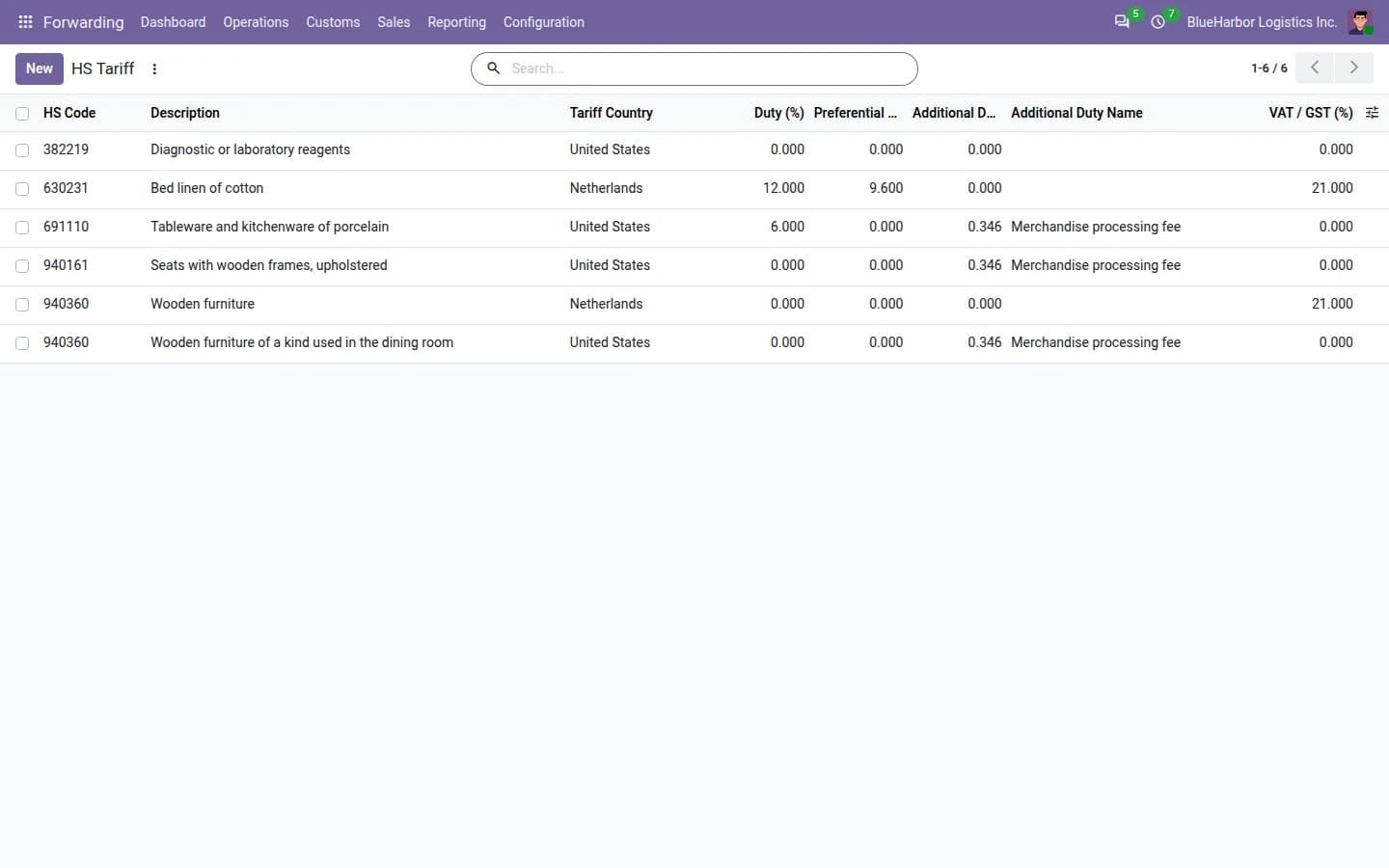
Each HS code has rates per country. The tariff lines hold an ad valorem duty, a preferential rate, a specific duty, an additional duty such as excise or fees, and VAT or GST. The declaration applies them per line and totals the duty and tax payable.
Customs value depends on the incoterm
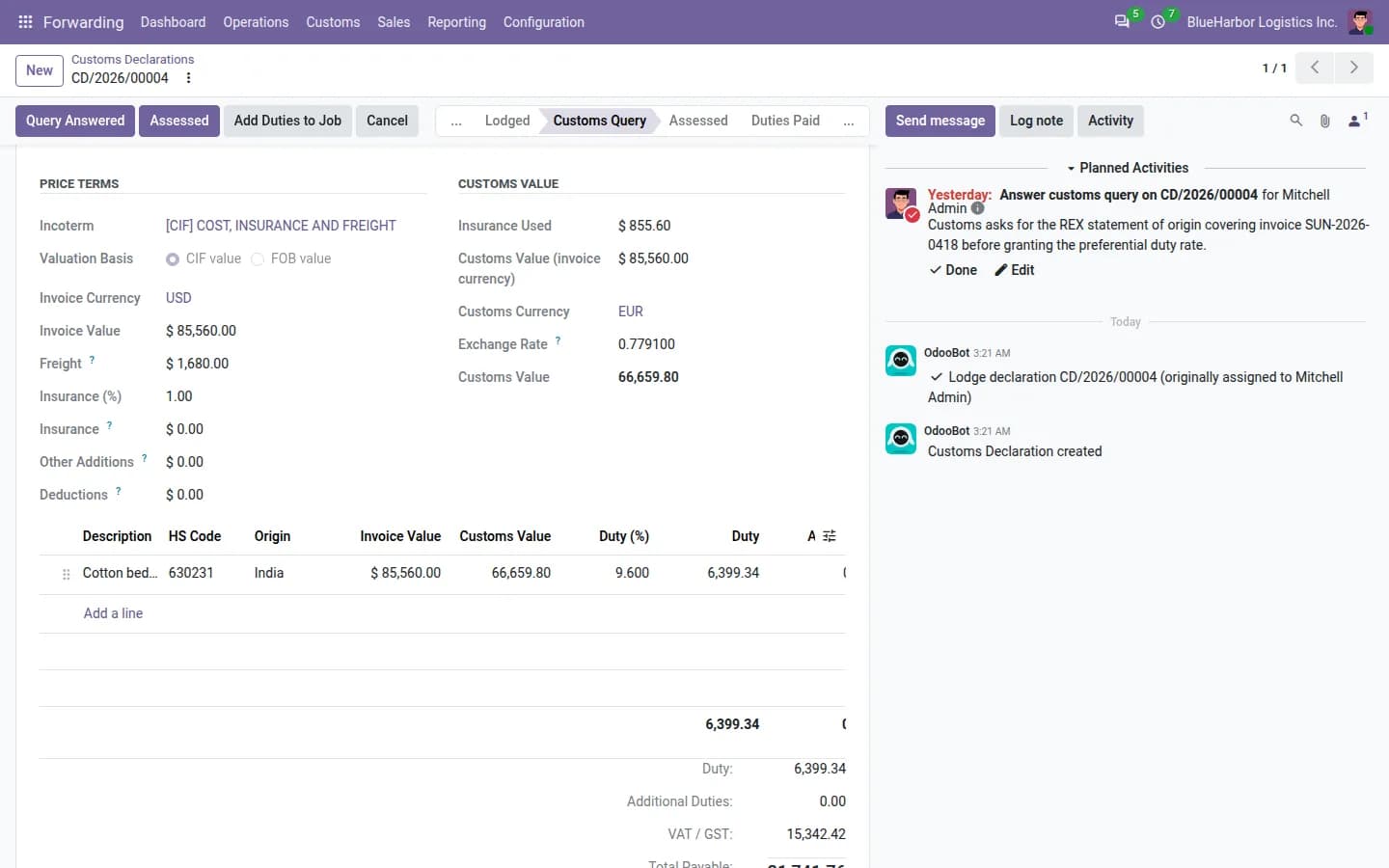
A common mistake is a customs value that forgets freight or insurance. CIF includes them, FOB does not. The value is built from the incoterm, freight, insurance, other additions and deductions and the customs exchange rate, and then spread over the lines.
Do not find missing documents at the customs desk
A checklist covers the invoice, packing list, transport document, power of attorney, proof of origin and licences. Mandatory documents must be present before the declaration can be lodged.
A desk for the broker
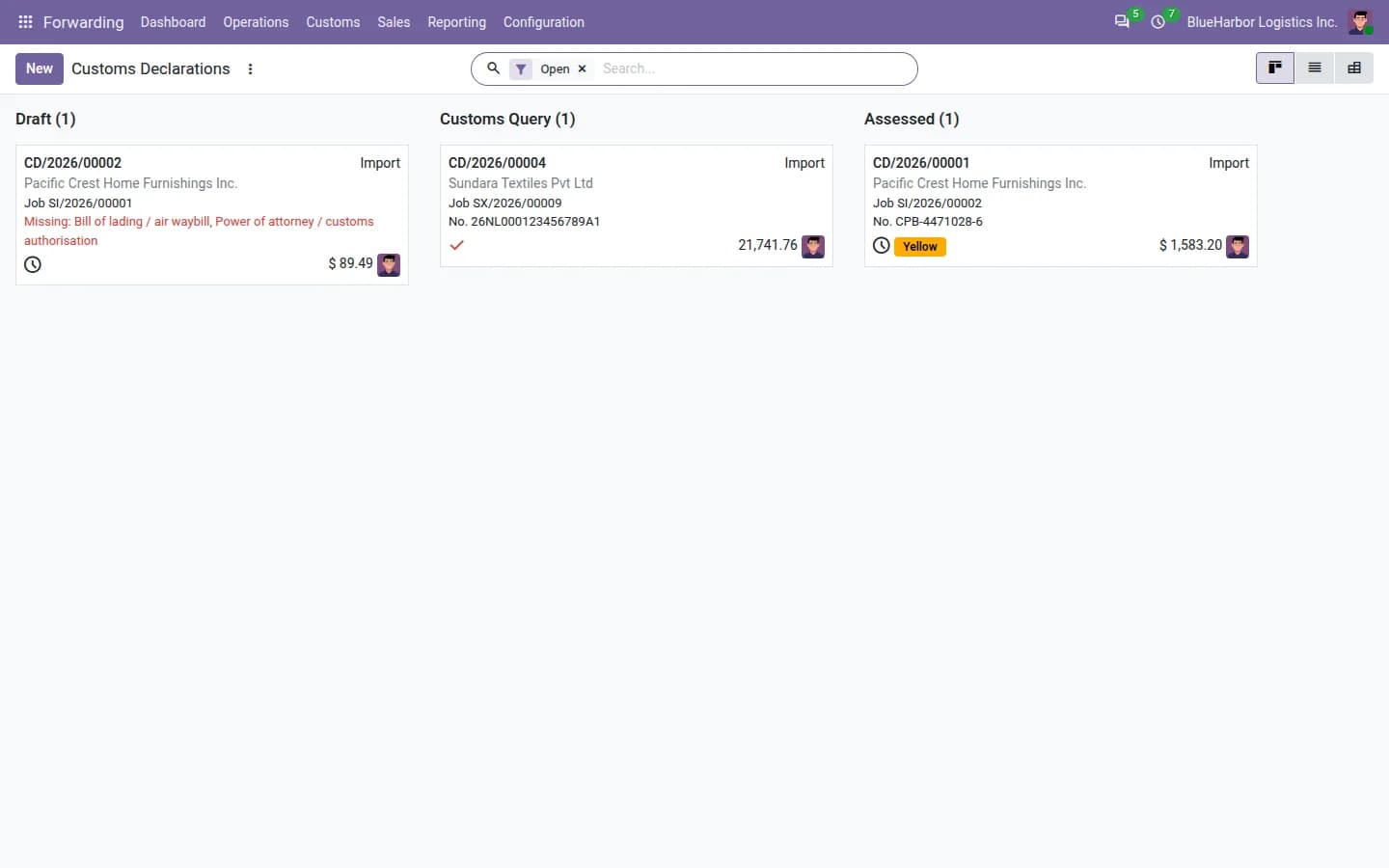
The status follows the real process: ready, lodged, query, assessed with the green, yellow or red channel, paid and released. Activities remind the broker and the operator what is waiting, and customs queries are recorded on the declaration.
Get paid for the duties you advanced
When the shipment is released, the job gets its customs milestone. The duties paid and the clearance fee become charges on the job, so they are invoiced to the customer and the payments to customs are billed with it. Nothing depends on someone remembering.
This is the Customs Declarations add-on for our Freight Forwarding app: declarations per job, HS tariff, CIF and FOB valuation, documents checklist, broker desk and duty re-billing.
Frequently asked questions
Which declaration types are covered?
Import, export, transit, re-export and temporary admission.
Does it calculate CIF and FOB values?
Yes. The customs value is built from the incoterm, freight, insurance, other additions and deductions, and the exchange rate.
Does it need the Freight Forwarding app?
Yes. Customs Declarations is an add-on for our Freight Forwarding app.